


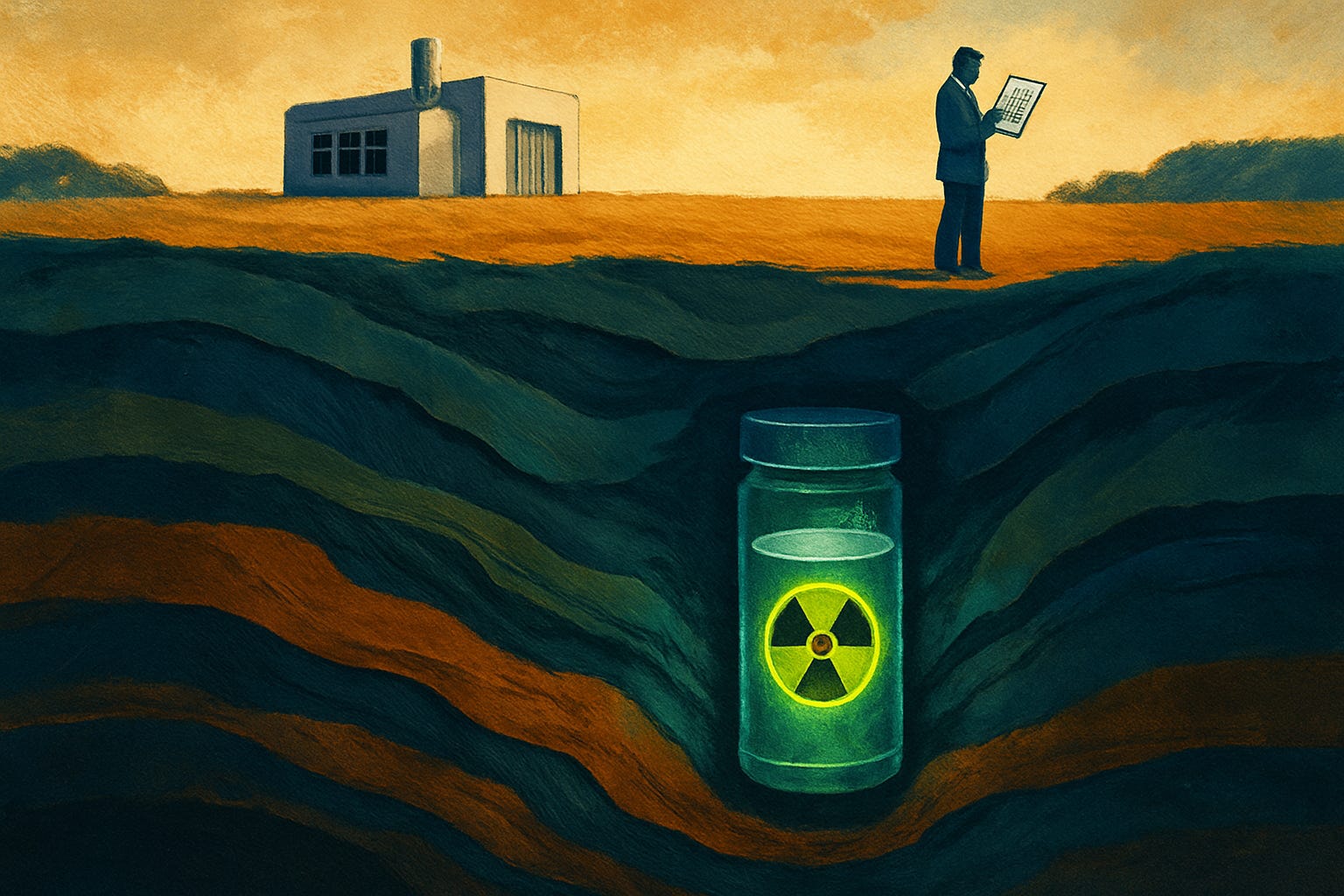
BasicsA 2022 PNAS study by Lindsay Krall, Allison Macfarlane, and Rodney Ewing found that water-, molten salt-, and sodium-cooled small reactors increase the volume of nuclear waste needing disposal by factors of 2 to 30 compared with an 1,100 MWe pressurized water reactor. ⚛️ Four years later, that paper still sets the terms of nearly every SMR waste argument. Vendors answer with denser fuel and recycling. No commercial SMR fleet exists yet to settle the dispute with operating data. 📊
The answer to the title question depends on the reactor type, and that split matters more than any single multiplier.
What the PNAS study found ☢️
The authors modeled three designs: a Toshiba sodium-cooled reactor, the NuScale light-water module, and Terrestrial Energy’s molten salt IMSR. They blame the extra volume on neutron reflectors and on chemically reactive fuels and coolants. Small cores also leak more neutrons, which activates the structural steel around the fuel. 🔬
2 to 30 times the energy-equivalent waste volume, depending on the design
About 1.7 times more waste per unit of energy for NuScale, according to Reuters coverage of the study
Higher fissile content in SMR spent fuel, which complicates criticality checks in storage and disposal
No decay heat benefit, which the authors call the metric that drives repository performance
That last point deserves attention. The authors say volume is not the most important measure. Heat and chemistry decide how much space a repository needs. So does a 30x volume multiplier matter if the heat load barely moves? 🤔
Terrestrial Energy disputes the findings. It told The Globe and Mail that the passages on its IMSR contain “numerous inaccuracies” and that the reactor is 50 percent more efficient than a conventional unit. Critics of the study also note that it rests on models, not on quality-assured operating data. Both objections are fair. Neither erases the point that the early SMR waste claims were thinly sourced.
Where the spent fuel goes today 🏗️
The United States has no permanent repository, because Washington stopped funding Yucca Mountain. Spent fuel sits in pools and then in steel and concrete dry casks at plant sites. DOE figures cited in industry coverage put the national inventory near 90,000 metric tons. 📦
For light-water SMRs, the gap with the existing fleet is small. NuScale’s 77 MWe module runs on standard fuel enriched below 4.95 percent, and the NRC certified the design in a final rule that took effect in February 2023. NuScale’s standard plant includes a dry storage area for the fuel it produces. A VTT analysis finds that when burnup and enrichment stay close to today’s reactors, existing disposal methods still apply. ✅
The picture changes with the exotic designs. The IAEA’s coordinated research project concludes that SMR fuels will require adaptation at every stage of the back end, from storage and transport to reprocessing and disposal.
Light-water SMRs: familiar fuel, familiar casks, mostly familiar disposal questions
High-temperature gas reactors: X-energy’s Xe-100 pairs a 320 MWe four-unit plant with TRISO pebble fuel, a form no repository has licensed yet
Molten salt and sodium designs: reactive coolants and fuels that need treatment before disposal
Which of those three paths does a regulator trust first? 🌍
Recycling is the industry’s real answer ♻️
The strongest counter to the PNAS findings is that the fuel does not have to be waste. Oklo plans a $1.68 billion advanced fuel center in Oak Ridge, Tennessee, whose first phase is a pyroprocessing plant that turns spent fuel into fuel for fast reactors such as its Aurora design. According to its SEC filing, Oklo has completed a licensing project plan with the NRC and is in pre-application talks. Metal fuel production is targeted for the early 2030s, subject to approvals. 🚀
Washington is leaning in. In February 2026, DOE awarded more than $19 million to Alpha Nur, Curio Solutions, Flibe Energy, Oklo, and Shine Technologies for recycling research. On April 22, it issued two requests for applications seeking private-sector proposals for reprocessing and recycling facilities. DOE says recycling can cut waste by about 90 percent. That is a department claim, not a demonstrated result at commercial scale. 📈
The PNAS analysis left recycling out, so the two camps are partly arguing past each other. Every project, deal, company, and regulatory event we cover is logged, verified, and searchable in SMRbrief Pro, including the fuel-cycle awards above. The recycling facilities are the ones to track, since none has an NRC license yet.
Repositories and rules to watch 🔥
Finland is the test case. Its radiation regulator STUK issued a favorable safety assessment for the Onkalo repository in August 2026. Onkalo is designed for 6,500 tonnes of spent fuel, and Posiva wants to be ready to start disposal by the end of 2026. The government still has to grant the operating license, and the ministry expected to take it up this autumn, so check for a decision before citing the timeline. How Finland will handle fuel from future SMRs has not been decided. 🧪
On the US side, the NRC finalized 10 CFR Part 53 on March 26, 2026, and expects design approvals in 18 months or less. That speeds reactor licensing. It does nothing for disposal, and the gap between a fast license and a repository that does not exist is the sharpest tension in the sector. ⚡
Onkalo: operating license decision pending with the Finnish government
Oklo Tennessee: NRC pre-application phase
DOE recycling program: applications under review
US repository: no site, no schedule
If recycling works at scale, the volume debate fades. If it stalls, will regulators sign off on SMR fleets whose waste has no destination? 🤔